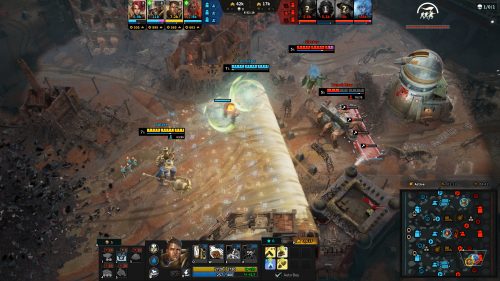
Imagine the First World War, but alongside the trenches and soldiers march towering giants born from dreams—or nightmares. That’s March of Giants, Ubisoft’s first free-to-play, 4v4 MOBA (multiplayer online battle arena).
The development team is holding a public test from October 7 to 18, and you’re invited! Just go to the game’s Steam page and click “Request Access” during the test period.
Want to learn more about the game before jumping in? Well, you’re in luck, because Laure Guilbert, product marketing manager, sat down with us to share more about the game’s philosophy, approach, pillars, and future.
A touch of madness
“At its core, what I love about this team is that we’re incredibly ambitious, but also very humble,” says Laure. “When we started this project, everyone knew we were embarking on a pretty wild adventure.”
The MOBA market is dominated by League of Legends and Dota 2, and no new title has managed to carve out a place alongside them in the last 15 years. “To try to make a new MOBA, you have to be a bit rebellious, and you have to be a bit crazy,” she says.
But the team is no stranger to ambition. Many of its members come from Rainbow Six Siege, the tactical shooter that has captivated more than 80 million players. “When Siege was in development,” Laure recalls, “we were told that nothing was going to revolutionize the shooter. There was already Call of Duty, Battlefield, Counter-Strike—it was over.”
But once it launched, Siege completely transformed the shooter genre, and in the years that followed, other games also emerged, including Overwatch and PUBG.
“Our perspective is that, yes, MOBA is a difficult genre to break into,” says Laure. “But there’s room for a different and innovative experience.”
“I have absolute respect for League of Legends and Dota. Their teams created something excellent. They have an extremely engaged player base, and those games are always going to be around,” she continues.
“We don’t want to position ourselves where these games already are,” she explains. “If you copy, you’re done. Why would a player leave an experience they love for a copy? It never works.”
The March of Giants team’s approach is therefore not to imitate, but to offer something different and to evolve the MOBA genre. “Right now, people in the industry are hungry for originality,” explains Laure. “Our game introduces a new universe. We have a very strong identity and it’s a gift to be able to do that. People want a unique experience, and as a team, we’re giving everything we have to deliver one.”
Fairy tales in the trenches
The idea for March of Giants began with the image of the First World War: a battlefield in constant chaos but in perfect balance, where both sides were trying to tip the scales on the frontline—just like in a MOBA.
In fact, the game’s First World War-inspired aesthetic fits perfectly with its gameplay. To win, players must push the line and destroy enemy fortifications to bring an endless war to an end. “The setting of the war is easy to understand and creates an immediate sense of stakes,” says Laure.
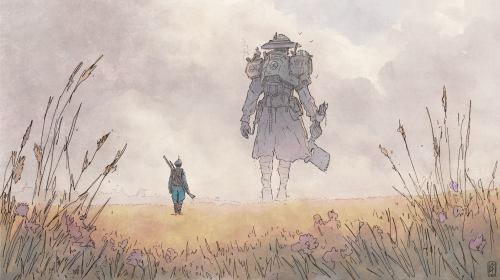
This narrative framework is also useful in attracting different audiences. “MOBA is a deep genre that speaks to many types of players,” says Laure. “Our ideal audience is people who love gunpowder fantasy and steampunk. We hope the magic created by this unique tone and our gameplay innovations will reach the people who will want to make it their new game.”
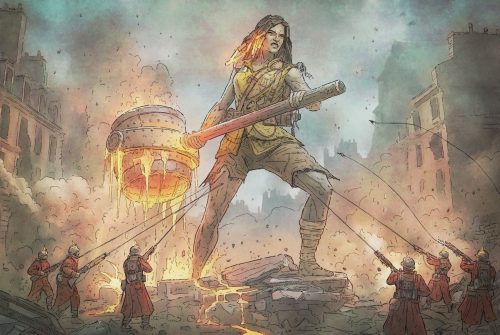
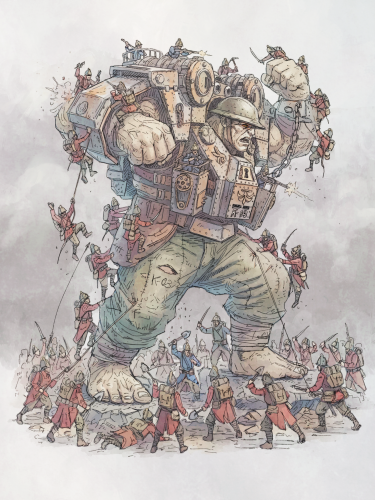
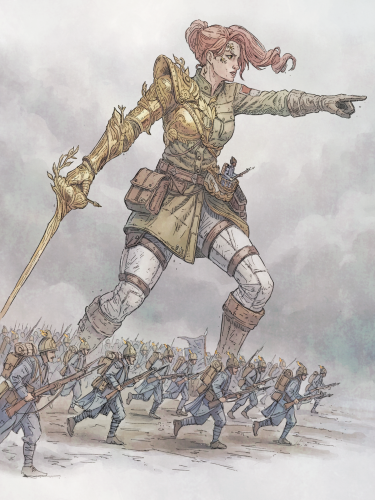
These gameplay innovations are first and foremost embodied by the giants: creatures born from dreams and nightmares, created through mysterious means by the two warring factions in an effort to break through the frontline.
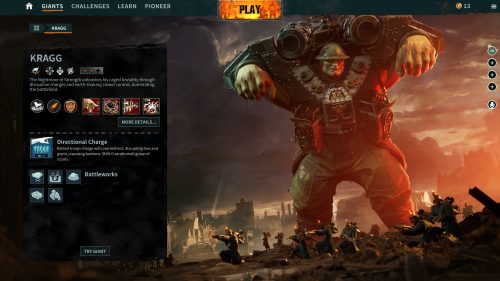
These giants command hundreds of soldiers who can take the form of infantry, cavalry, or even tanks. In an evolution of the MOBA genre, players can use these soldiers to scout the battlefield, gather resources, capture targets, charge against enemy giants, and attack fortifications.
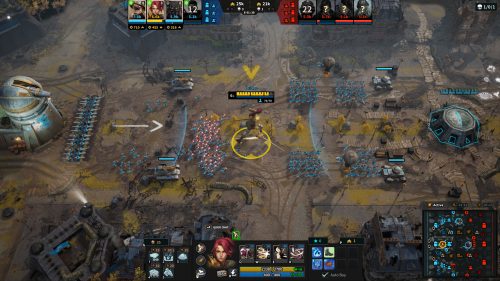
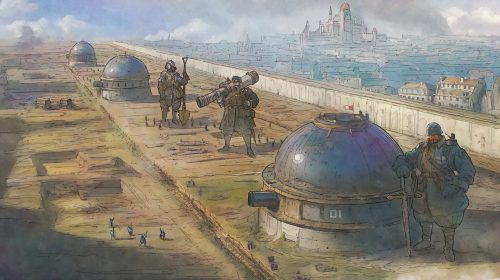
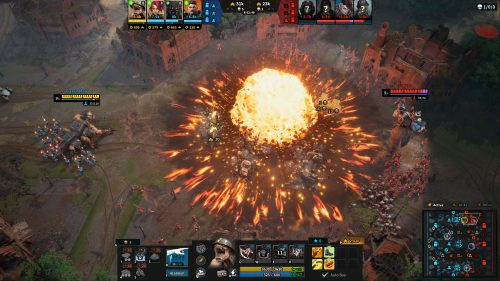
These fortifications, called battleworks, are another pillar of the game. Taking the form of trenches and bunkers, they give players a new form of expression by allowing them to alter the level design. “Battleworks change the environment,” Laure explains. “They let you to transform a classic MOBA lane into a battlefield that evolves over the course of the match. When a battlework explodes, you can no longer place anything there, so you have to think strategically, because the map changes with every decision.”
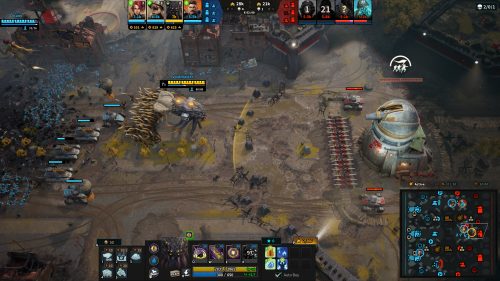
When these three pillars come together—the giants, the soldiers, and the battleworks—the game’s scale becomes truly impressive, especially toward the end of a match. “This is not an arena skirmish between a few characters fighting each other. It’s a real battlefield that requires strategic thinking,” Laure says.
A late-night LAN party
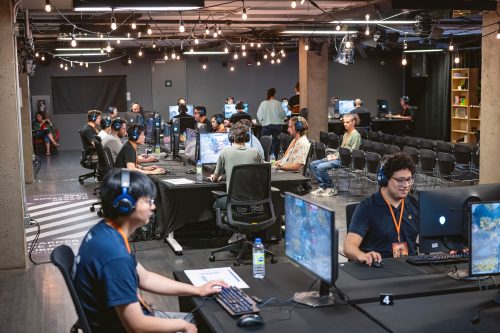
To get to where it is today, the team has organized dozens of play sessions with external participants over the years.
One of these sessions, held recently in September, brought some of the world’s top MOBA players into the very studio where the game is being developed.
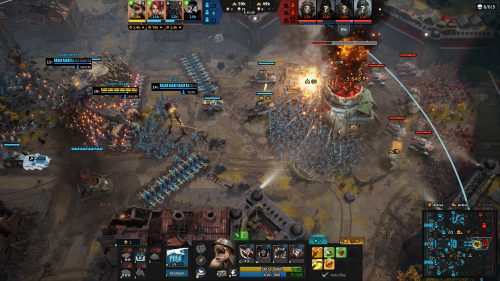
“Some people on the team wanted us to go easy on these elite players,” Laure recalls. “I said no, that’s the nature of a MOBA—it’s competitive. We have to show them the game’s depth, and show them how far you can go.”
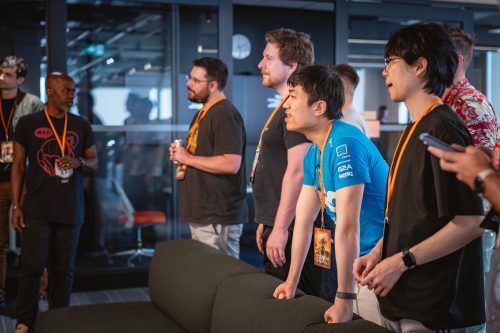
So the development team didn’t hold back. It won every match, and the elite players loved the experience. “They just wanted to keep going, and going, and going,” says Laure. “They could have gone back to their hotel, but they said, no, we want to stay here and play. So we ordered pizza and dumplings, and we stayed with them until one in the morning.”
“It was such a great night,” she continues. “As a developer, you don’t experience that often. It was like an old-school LAN party. It really warmed my heart. I hope that everyone in the industry gets to experience something like it. I’ve never felt so motivated.”
An ambitious march
The March of Giants team is planning a public test from October 7 to 18 to gather feedback from as many players as possible. “We want to ensure our operational excellence is in place before launch. We have to show that we’re a serious team, that we know how to make competitive PvP,” says Laure.
This test will be followed by more sessions in the winter and spring, with early access planned for summer 2027. “Above all, the game has to be fun,” says Laure. “We have an experience players have never seen, and we hope it will inspire them to learn more and to challenge themselves.”
After all, a game can only truly come alive with an engaged community. “The moment we go live, I hope to see things we didn’t anticipate as a development team,” says Laure. “You know, when your game is in players’ hands, you have to let go. It becomes their sandbox, and we hope to see strategies that even we didn’t think of.”
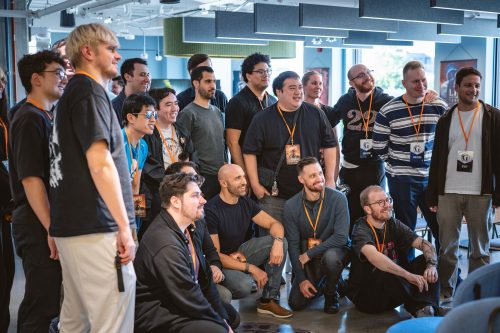
Once the game launches, it’s only a matter of time before dedicated players manage to do what today’s elite players couldn’t do in one evening: defeat the development team.
Experience the trenches
The Pioneer Playtest is open to everyone from October 7 to 19. The team invites you to try the game, whether you’re a fan of MOBAs, love a good steampunk setting, or are simply looking for a new experience.
“We want to see you there,” says Laure. “Come sweat it out in the trenches, it’ll do you good.”
You can download March of Giants on Steam.